Written by VIVO Expeditions Editorial Team
Where to See Royal Flycatcher in Costa Rica
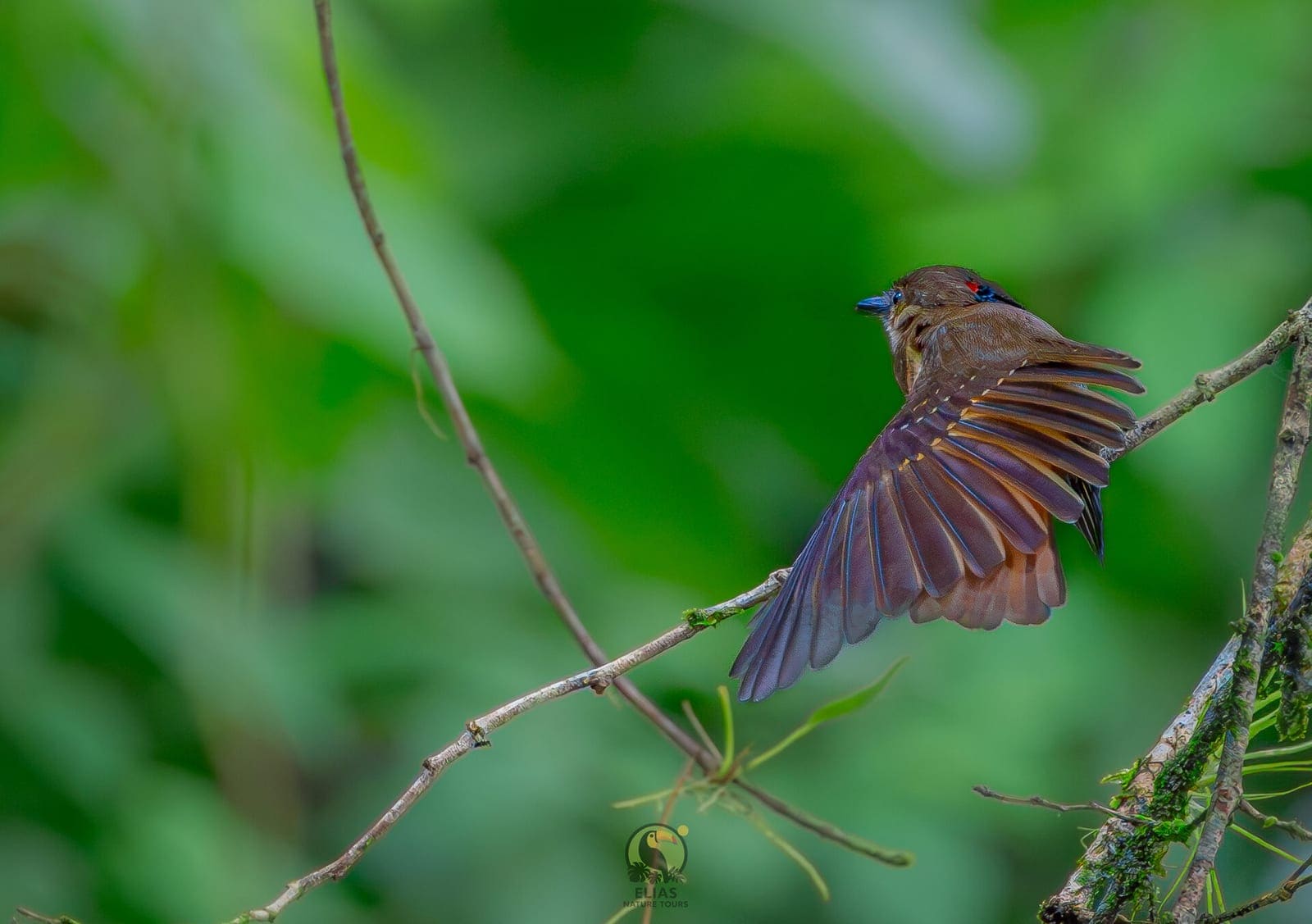
The best location for Royal Flycatcher photography in Costa Rica is the Boca Tapada region in the northern lowlands near the Nicaraguan border. This remote rainforest area holds a resident population and our guides know several reliable perch trees where the species returns regularly. Other locations include Sarapiquí and the Caribbean lowlands, but encounter rates are lower than at Boca Tapada.
View Tour Details The Crest Display — What to Expect
The iconic crest is not displayed during normal foraging. You are most likely to see it during agonistic encounters between males, during courtship, or when the bird is startled. Patience at a known perch tree — sometimes 1–2 hours — is the most reliable strategy. Our guides at Boca Tapada have documented multiple crest displays at specific locations.
Photography Tips
Use a 400–600mm lens with a fast shutter speed (1/800s or faster) to freeze any movement. The forest understory is dark — ISO 1600–3200 is normal. If the bird is perched and calm, a slower shutter with IS/VR can work. The most important thing is positioning: get to eye level with the bird, which usually means crouching or sitting. Our guides will help you anticipate behavior.
Best Time to Visit
The Royal Flycatcher is present year-round at Boca Tapada. The best months for overall photography conditions are May through October, when the forest is lush and bird activity is high. Early morning (5:30–9:00 AM) is peak activity time.
Frequently Asked Questions
What makes the Royal Flycatcher hard to photograph?
It's a shy, elusive lowland species rarely seen well outside specialized locations like Boca Tapada, making a targeted expedition the most reliable approach.
What lens works best for photographing the Royal Flycatcher?
A 400-600mm telephoto lens gives you the reach needed for this small, quick-moving forest bird.
What time of day gives the best chance of finding it?
Early morning hours, when the bird is most active feeding, offer the best opportunity for both sightings and photography.
How do I book a trip focused on the Royal Flycatcher?
Our Boca Tapada Full Day Expedition is the most reliable way to find it — message us to reserve your spot.
Ready to photograph the Royal Flycatcher? Our Boca Tapada Full Day Expedition is the most reliable way to find it.
Free planning · No commitment · Local expert guidance